learn · 2026-11-18 · 4 min read
What four days in Himalayan snow taught me about setting goals
On 7 March 2020 I was on a bus to Uttarakashi, nine hours with hardly any road under it, my hands gripping the seat every time the bus jumped a pothole and threw us all up with it. I was on my way to serve on a Vipassana course near Rishikesh a week later and, before that, into the Himalayan foothills in a pair of summer trainers. I'd spent the two years before that on Bali. That same day I wrote that I kept catching myself playing the super-ascetic on trips like this: I didn't care what I wore as long as it was warm, a hot shower now and then was heaven, and I needed a quiet place to sit, very little food and not much money. Four days up there turned out to be a very good corrector of how I set goals: after them I knew what I wanted from my own body, and that I was going to walk in the mountains.
The next day, past Barkot and about ten kilometres from the Himalaya, I went for a walk and understood that I truly wanted to live, and my legs started skipping ahead of me at a run. The day after, we rode motorbikes to a small town at the foot of the mountains, where I bathed in a hot spring and jumped from it into the ice-cold water running down from above. Then came Holi, which went wonderfully. Breakfast was at a house in the next town, where I shared their food, ate a flatbread with potato and ghee and spent the whole day half asleep with an aching back, so that on the way home I told myself I'd buy oranges.
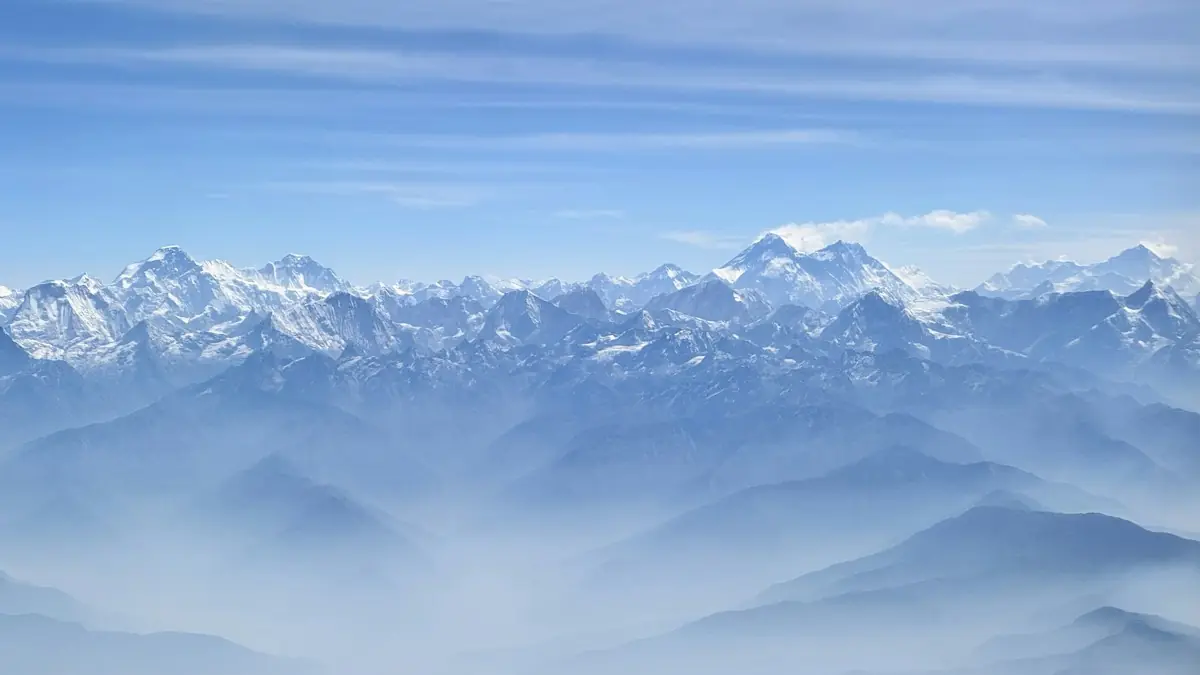
On the morning of the eleventh we set off on a two-day trek, and the climb was easy until, after a couple of hours, we reached snow. We stopped at a two-room house where a fire burned all day and all night. It was impossible to stay in those rooms for long, with the smoke cutting my eyes and going down into my lungs. By evening the temperature had dropped to about zero and a Himalayan wind had come up that went straight through to the bone. I stood looking at cliffs covered in what looked like white pollen, feeling every breath in and out of that unearthly force I'd climbed into. The Indians cooked chapati and curry right there on the fire, while what I'd brought was oranges, tomatoes, an onion and some garlic.
After a long night I came out onto a wooden verandah into heavy snowfall, finished off some oranges and drank a hot mug of water. In the early cold, at two or three degrees, I found I'd become friendlier still towards this ice age of mine. And then came the question: wasn't this what I wanted, while I was burning under the Balinese sun for two years?
We climbed a little higher and it simply overwhelmed me. It didn't matter that I'd put away boiled dal and vegetables beforehand, or that my wet summer trainers had plastic stretched over them, because I was standing knee-deep in a drift, stock-still, gazing down at a valley under the sky at the foot of the Himalayas.
We came down fast, in an hour and a half or so, and drove to the usual hot spring five kilometres from where we were staying. The next day I was in a car to Barkot in pouring rain, my feet frozen to the bone with no socks on and my wet trainers lying on the rubber mat, waiting three or four hours for permission to go on because the roads somewhere ahead had drifted over. It was seven to nine degrees, and I wrote down: the weather's a bit poor for a second, and "I"? I'm fine.
Those four days were a very good corrector of how I set goals. I now knew from my own body what it's like to climb up to tops buried in snow and to live in those conditions, and, the main thing, I'd decided I was going to walk in the mountains. Looking back, what I'd been wanting for two years on Bali was mostly a more comfortable version of what I already had, better food, a better room, better weather. You don't notice that happening, because each want is reasonable on its own. The hours I remember from that trip are the ones with the least in them: a verandah, oranges, hot water and snow. My course of guided sittings on silence and presence carries the name of those mountains, Himalayan Silence, and you can sit it anywhere, in dry socks.
I reached the guesthouse that evening and bought new trainers and six chocolate doughnuts, the first doughnuts I'd eaten since 2014. The next morning I sat, ate oranges and went to the shop, because a course was waiting where I knew I'd practically not eat. Right before the taxi, one thing at a time and very deliberately, I had a Magnum with nuts, a cone with Oreo and soya milk, a Snickers, two KitKats, and Oreo biscuits with a Coke. My mind automatically began to worry about my teeth, but I was doing it far more consciously than I used to, so the calm held. Waiting for the taxi, I bought some fresh soya sprouts nearby, and then I was ready to serve.
Questions people ask
Where was the trek?
From Uttarakashi, past Barkot, into the Himalayan foothills, in March 2020, a week before serving on a Vipassana course near Rishikesh.
What did the four days change?
How I set goals. I knew from my own body what it's like to live up in the snow, and I'd decided I was going to walk in the mountains. Looking back, what I'd wanted on Bali was mostly a more comfortable version of what I had.
What is Himalayan Silence?
My course of guided sittings on silence and presence, named after those mountains. You can sit it anywhere, in dry socks.
Start Himalayan SilenceMore from Learn